
Table of Contents
ToggleWhat is digital marketing?
What Is Digital Marketing? A Plain-English Guide for Business Owners and Beginners
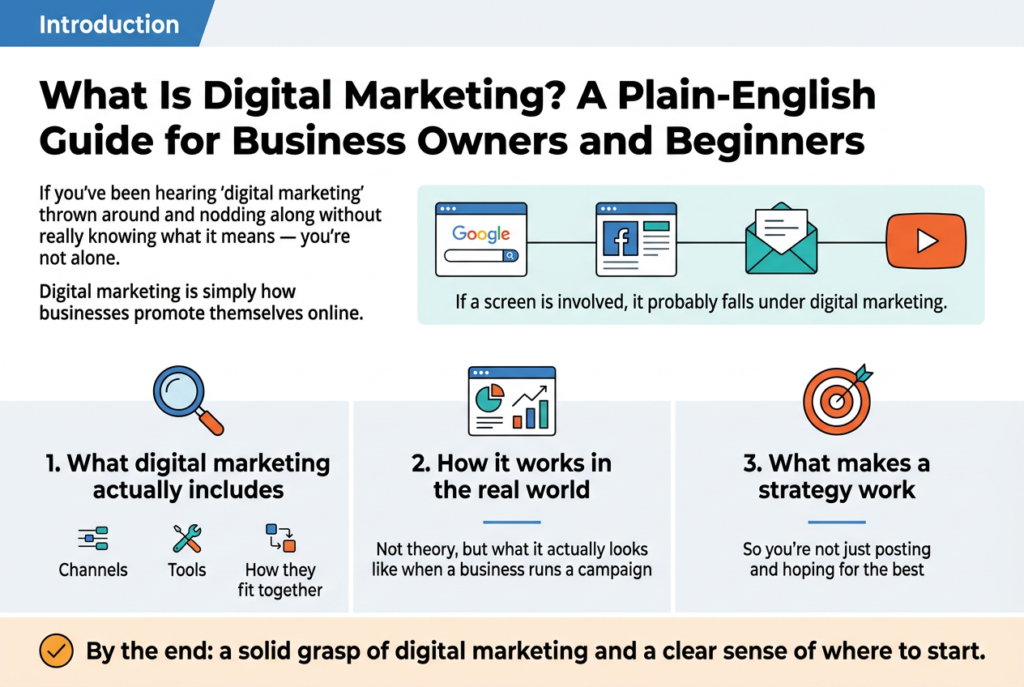
If you’ve been hearing “digital marketing” thrown around and nodding along without really knowing what it means — you’re not alone.
Digital marketing is simply how businesses promote themselves online. That covers everything from Google search results and social media ads to email campaigns and YouTube videos. If a screen is involved, it probably falls under digital marketing.
This guide is for small business owners, side hustlers, and anyone just starting to figure out how to grow their brand online — no marketing degree needed.
Here’s what we’ll cover:
What digital marketing actually includes — the channels, the tools, and how they fit together
How it works in the real world — not theory, but what it actually looks like when a business runs a campaign
What makes a strategy work — so you’re not just posting and hoping for the best
By the end, you’ll have a solid grasp of digital marketing and a clear sense of where to start. Let’s get into it.
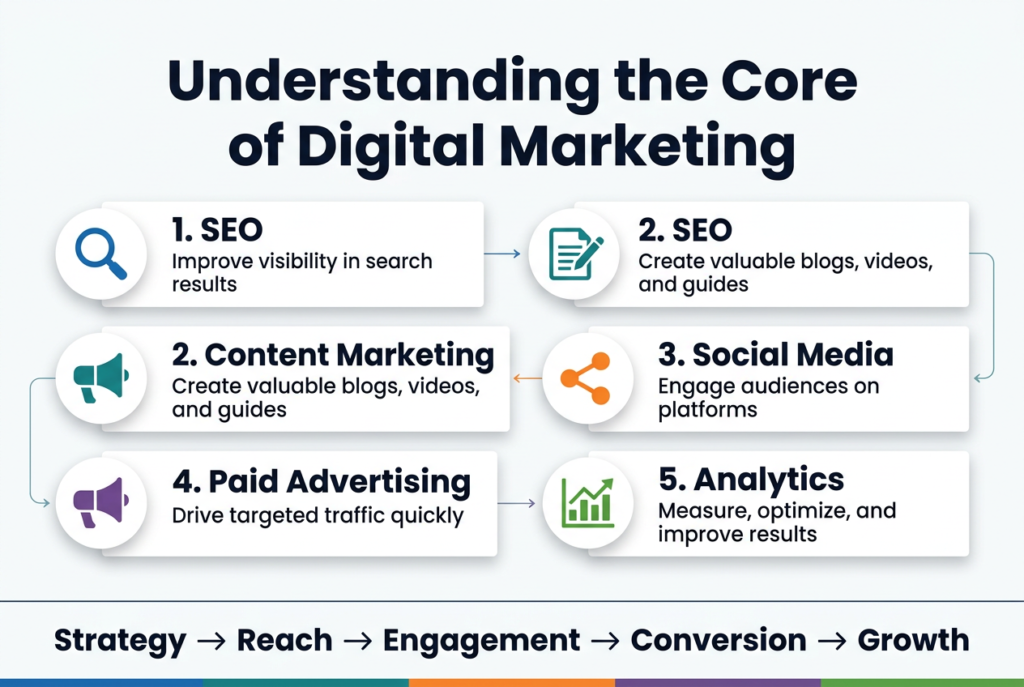
Understanding the Core of Digital Marketing
How Digital Marketing Differs from Traditional Marketing
Digital marketing puts your brand where people actually spend their time — online. Unlike a billboard nobody can click, digital channels let you start real conversations with your audience.
Why Digital Marketing Matters for Businesses Today
Consumers research products online before buying — almost every single time. Without a digital presence, you’re invisible to them. Whether you’re a local bakery or a global brand, digital marketing levels the playing field. Small businesses can compete with industry giants through smart targeting and quality content.
The Key Goals Digital Marketing Helps You Achieve
Digital marketing isn’t just about getting clicks. It drives real business outcomes:
Brand awareness — getting in front of the right people
Lead generation — attracting potential customers actively looking for solutions
Sales growth — turning interest into purchases
Customer retention — keeping buyers coming back
Community building — creating loyal audiences around your brand
The Main Types of Digital Marketing Channels
Search Engine Optimization and Why It Drives Long-Term Growth
SEO helps your website show up when people search for what you offer. By optimizing content, improving site speed, and earning quality backlinks, you build visibility that compounds over time — without paying for every click.
Social Media Marketing and Its Power to Build Communities
Platforms like Instagram, LinkedIn, and TikTok let brands have real conversations with their audience. Done right, social media turns followers into loyal fans who actively share your content and recommend your business.
Email Marketing and How It Nurtures Customer Relationships
Email remains one of the highest-ROI channels available. It keeps your brand top of mind, delivers personalized offers directly to subscribers, and gently guides leads through the buying journey at their own pace.
Pay-Per-Click Advertising and Its Ability to Deliver Fast Results
PPC puts your brand in front of the right people immediately. Unlike SEO, you’re not waiting months for results — you set a budget, target specific audiences, and start generating traffic the same day.
Content Marketing and How It Establishes Brand Authority
Blogs, videos, and guides answer the questions your audience is already asking. Consistently helpful content builds trust, improves SEO, and positions your brand as the go-to expert in your space.
How Digital Marketing Works in Practice
Setting Clear Goals That Guide Your Strategy
Before anything else, know what you’re chasing. Vague goals like “get more traffic” won’t cut it. Instead, define specific targets:
Brand awareness – reach new audiences unfamiliar with your business
Lead generation – capture contact details from interested prospects
Sales conversions – turn visitors into paying customers
Customer retention – keep existing buyers coming back
Your goals shape every decision that follows — channels, content, budget, and how you measure success.
Identifying and Reaching Your Target Audience Effectively
Trying to reach everyone means reaching no one. Dig into who your ideal customer actually is:
Age, location, income level
Pain points and daily challenges
Where they spend time online
What content they engage with
Choosing the Right Channels to Maximize Your Budget
Not every channel suits every business. Match your channels to your audience and goals:
Start focused, track results, then expand what’s working.
Tools like Google Analytics, Meta Audience Insights, and customer surveys make this far less guesswork.